
From Karting to Cars: A Beginner’s Roadmap to Starting in Motorsport
From Karting to Cars: A Beginner’s Roadmap to Starting in Motorsport
The gap between karting and car racing isn’t as wide as people think – but it’s wide enough to catch most people off guard. According to a survey by the Motorsport Industry Association, less than 10% of karting participants successfully transition to competitive car racing, with safety regulations and technical requirements being the most common reasons cited. That number isn’t meant to discourage you. It’s meant to explain why approach matters more than ambition when you’re starting out.
Build Seat Time Before You Build Anything Else
The best investment a new driver can make is practice. Renting karts, simply drive up, pay, and drive, may seem trivial, but it helps you learn skills that are transferable to competitive racing: understanding the racing line, managing weight transfer when driving through corners, and learning to react quickly while driving at fast speeds.
Owning your own private kart can come later. What’s important right now is to get enough practice. Fifty hours spent in a rental kart will prepare you for racing much better than driving a new kart a few times with no additional practice would. Racing at a karting track, league nights, or arrive-and-drive events all help rack up those hours. When you’re ready to start racing cars, those hours are really going to count.
Get Licensed Before You Get In A Car
Obtaining a competition license is not just a checkbox activity but the first step to race. In most cases, it’s compulsory, and for good reason.
You must prove you understand the rules, regulations, and etiquette of competing in what can be heightened-risk environments. To get this squared away, you need time. You can’t rock up to an ARDS school and immediately pass. They’re teaching you how to safely conduct yourself on a racetrack. This takes time. Time you should account for if you want to get started on your journey to the grid.
The Safety Triangle – Where You Don’t Negotiate On Cost
There is a way to do this journey where you go all-out on your car and shave costs with personal safety gear. Don’t.
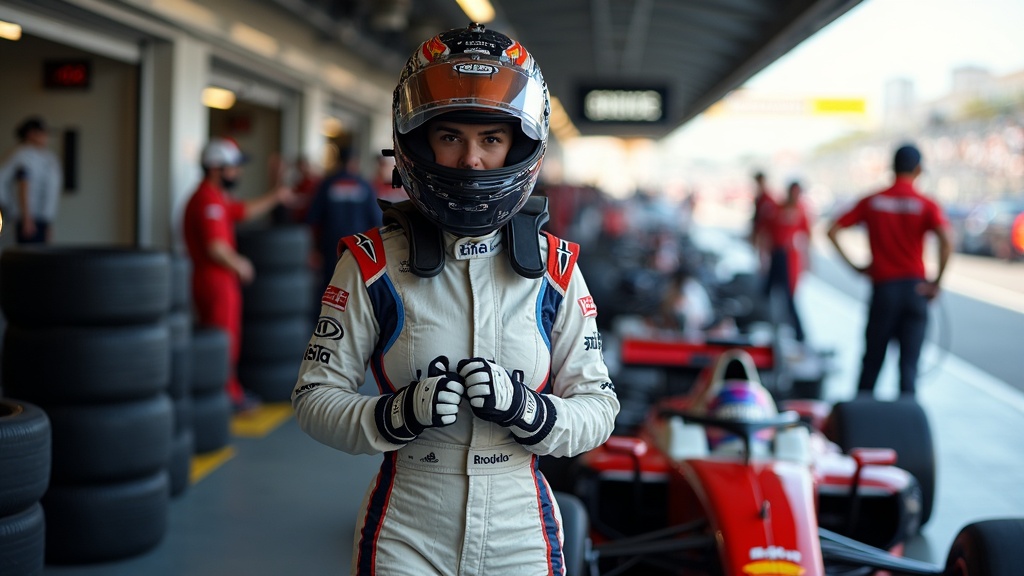
The three things that define this as the most important season of all: your helmet, your HANS device, and your race suit. This is a minimum for any driver who is serious: consider the above as non-negotiable. We’re talking specifically about your suit today. For starters, it has to meet FIA Standard 8856-2018, which is the benchmark for fire-retardant racing gear. Nomex constructed suits meet this standard and provide protection that cheaper alternatives do not.
Protection is about ensuring you keep your skin if a fire takes hold in the car. It’s also about those vital milliseconds that separate leisure racing and the next hospital parking lot victim. A decent suit can give you that extra time.
Fit also contributes to your safety – a suit that’s too baggy can snag on a corner while one that’s too constrictive will distract your arms when you have better things to do. For women drivers, the off-the-shelf suit isn’t the best fit, thanks to an industry that sets sizes to the ideal proportions of a man. The solution is bespoke women’s race suits that are correctly sized and designed to fit compactly while still providing the full complement of safety features.
The math on this isn’t hard to do. Spend the cash. It’s the one outlay you should never skimp on.
Choose The Right Series For Your First Season
Moving into car racing may lead you to opt for something fast but don’t do it. Opting for a high-participation spec series is a smarter choice for your first racing season.
In a spec series, every driver has the same car. Same engine, same setup limits, same equipment. Cars spec’d like the Mazda MX-5 are a prime example. This removes money as a variable and focuses everything on driving skill, which is where it should be when you’re learning. It also means the car holds its value well when you’re ready to move up, because there’s a real secondary market for it.
At the grassroots entry tier, clubman-level racing operates with precisely this principle. You’re racing people at a similar stage, in similar machinery, on a level playing field. That environment is where you actually develop.
The People Around You Matter As Much As The Car
Competing in races may seem like a solo endeavor but it’s not. Having a lead mechanic who is familiar with your vehicle and a driver coach who evaluates your data is far more beneficial than most other performance upgrades you could make for yourself.
Data-logging applications like VBOX illustrate precisely where you fall behind opponents, yet there has to be someone who helps you analyze the data and make the correct adjustments. A coach with experience in race tracks can be beneficial. A good mechanic can guide you towards avoiding a mechanical breakdown which could ruin your entire weekend event.
Create these networks before you make your seasonal racing debut, rather than after.
The drivers who are successful in making the switch from karting to racing aren’t always the quickest or fastest. They are the ones who consider a lengthy plan – investing time in their seat, safety measures, the appropriate support staff, and the suitable equipment that matches their current level of proficiency.