How to Navigate the Transition From Home to a Structured Learning Environment
How to Navigate the Transition From Home to a Structured Learning Environment
Transitioning from raising a child at home to sending them to school is one of the initial real challenges a parent must face. Not because it’s a wrong thing to do, but because it’s a tough thing to do. It can feel disruptive, and anything that disrupts the often quite delicately balanced emotional world of a young child is disproportionately emotional for all parties. The way to get through it is to see the transition itself as a thing with many stages, not necessarily as any one single event.
What’s Actually Happening Developmentally
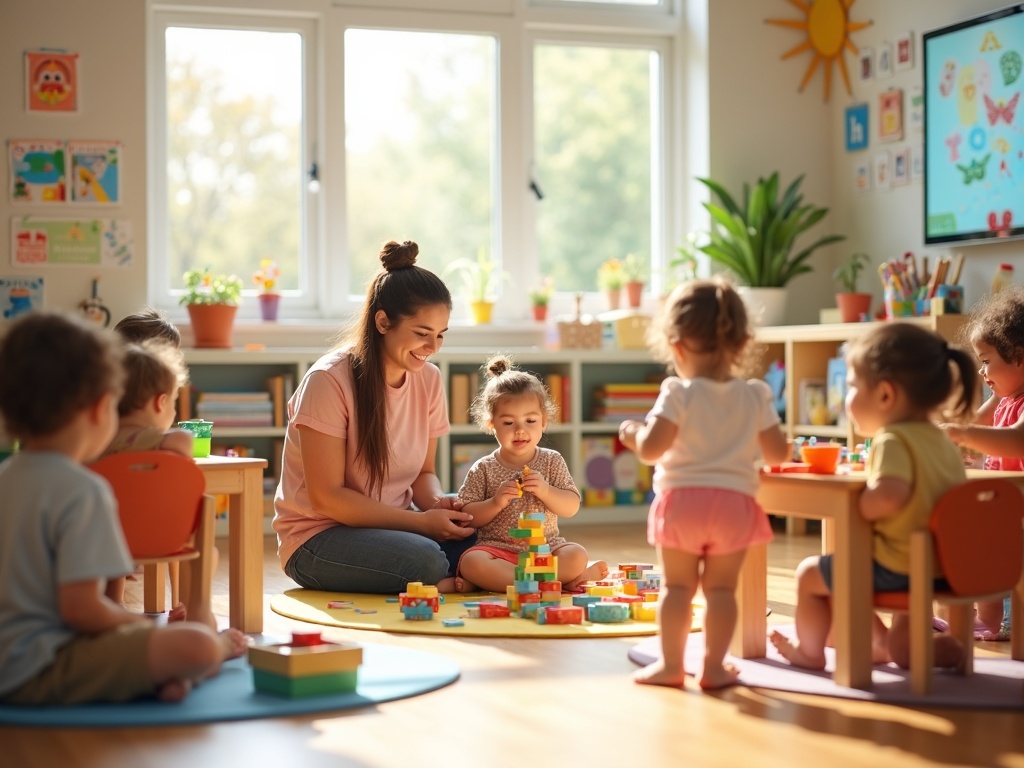
When a child moves from home to a group setting, they’re not just adjusting to new people and a new room. They’re being introduced to a social architecture that doesn’t exist at home, waiting for a turn, following group cues, sharing attention with eight other children at once.
This is where the "hidden curriculum" lives. Nobody hands a child a worksheet on how to wait. They learn it by being in a room where waiting is simply what happens before the next thing. Circle time, transitions between activities, lining up before outdoor play, these structures teach self-regulation in ways that one-on-one home time genuinely can’t replicate.
The research on this is clear. The "serve and return" interactions between children and responsive caregivers, the back-and-forth of a child reaching out and an adult responding, are fundamental to how the brain wires itself and builds resilience (Harvard University Center on the Developing Child). A well-run childcare setting multiplies those interactions through peer relationships in ways that support long-term social and cognitive growth.
The Graduated Entry Approach
Don’t drop your child into a full day on week one. Most reputable centres use what’s called graduated entry, short sessions where the parent is present, followed by slightly longer ones as confidence builds. This process usually takes about two to four weeks, which is just enough time for the child to start trusting and bonding with the new people.
This isn’t just a courtesy offered to anxious parents. It’s grounded in attachment theory. The parent’s presence signals safety, which lets the child’s nervous system settle enough to start engaging with the new environment. Over time, that borrowed confidence becomes their own. Stay calm during drop-offs even when you don’t feel it. Children read parental anxiety quickly, and a hesitant goodbye communicates that there’s something to be hesitant about.
Build a Goodbye Ritual and Hold to it
One of the most counterproductive things a parent can do is linger, then slip out. It feels kind, but it teaches a child that disappearances happen without warning, which makes every moment of inattention potentially abandonment.
A brief, predictable goodbye ritual changes this. It might be three specific words, a particular hug, and a wave at the door. The content matters less than the consistency. When a child can predict how a goodbye works, they can prepare for it emotionally rather than be caught off guard.
Some children cry anyway. That’s not a sign the routine is failing. It usually means the routine is working, they know what comes next and they’re expressing their feelings about it, which is developmentally healthy.
How to Support the Transition From Home
The distance between home and a structured environment is easier to bridge when both places have similarities to begin with. For example, at home you can use "First-Then" phrases such as "First we eat, then we play" to resemble the kinds of sequences educators will present. Visual schedules that show what comes next can also be useful for children who are worried about the unknown.
But also, get into the details with the educators. Not the personality-related vague pointers, but real nuts-and-bolts info about which song helps during naptime, what "hurts" means versus what "I don’t like this" means, which attachment object is often brought from home. They can’t intuit your child’s coping mechanisms but they’ll sure use them with relish once you spell them out.
If you are comparing Daycare Auckland options, it’s not enough to ask what the program requires: you also need to ask what their plan is for the first few weeks. A centre that has a clear, articulated settling-in process treats the transition as part of the educational work, not an administrative inconvenience.
The Parent’s Role Doesn’t Stop at the Door
Co-regulation, the process of an adult helping a child manage big emotions, doesn’t transfer to educators automatically. It builds over time as a child learns to trust new adults. Parents can support this by speaking positively about the centre and the educators at home, asking questions about the day that invite detail rather than yes/no answers, and staying consistent with routines on days off.
Parallel play, when children play alongside rather than directly with others, typically doesn’t look like much is happening. But it’s where most early peer relationships begin. It gradually shifts into associative play, which then becomes cooperative play, and it all happens at its own pace.
The transition from home to structured learning is one of the first environments where a child practises being a person outside of their family. That’s not a small thing. It’s worth doing carefully, and it’s worth doing with confidence that the difficulty is temporary and the benefit is real.