Remove vs Hybrid vs Office Work: Evaluating Employee Productivity and Satisfaction
The workplace landscape has transformed significantly, creating various options for employees and employers alike. Remote work, hybrid models, and traditional office settings each come with their own set of advantages and challenges. Understanding the key differences and implications between these work styles is essential for determining which model best suits individual needs and organisational goals.
Many employees have found that remote work offers flexibility and comfort, while others thrive in the structured environment of an office. Hybrid models attempt to balance the benefits of both, allowing for in-person collaboration alongside the advantages of remote working. This article explores these three approaches to work to provide clarity on how they impact productivity, job satisfaction, and company culture.
As organisations continue to adapt, making informed decisions about work arrangements is crucial. By examining the nuances between remote, hybrid, and office work, this article aims to equip readers with the insights necessary to navigate their own work situations effectively.
Understanding Remote, Hybrid, and Office Work
The dynamics of work environments have shifted significantly in recent years. Distinct models have emerged, each with unique characteristics that cater to diverse needs and preferences. These models include remote, hybrid, and traditional office work.
Definitions of Remote Work, Hybrid Work, and Office Work
Remote Work refers to a work arrangement allowing employees to perform their tasks from locations outside the traditional office environment. This model emerged significantly during the pandemic, enabling flexibility and reduced commuting time.
Hybrid Work combines elements of both remote and office work. Employees split their time between home and the office, providing the advantages of face-to-face collaboration alongside the comfort of remote work.
Office Work encompasses a traditional workplace setting where employees perform their roles within a physical office. This model promotes in-person interaction and team cohesion but may lack flexibility compared to remote and hybrid setups.
Evolution of Work Environments
The evolution of work environments has accelerated due to technological advances and societal changes. Before the pandemic, remote work was often viewed as a perk. The sudden shift to remote working conditions forced organisations to adapt quickly, making this model mainstream.
As employees returned to the office, many companies adopted a hybrid work model. This approach started to gain traction as it offered a blend of in-person collaboration and remote flexibility. The modern workplace is now a diverse mix, responding to employee preferences for work-life balance.
Now, offices should ideally be designed to provide a bespoke environment tailored for work, incorporating features that encourage productivity, collaboration, and employee well-being. This can include provisions such as ergonomic chairs, height-adjustable desks, soundproof pods, flexible workstations, and well-placed lighting to reduce eye strain. Meanwhile, integrating practical elements such as Surespan’s aluminum floor hatches, underfloor cable management systems, and modular storage solutions can streamline operations, enhance safety, and support a well-lit, functional, and adaptable workspace.
Key Drivers Behind Changing Work Models
Several factors drive the shift towards remote and hybrid work models. Technology plays a crucial role, enabling seamless communication and collaboration. Tools like Zoom, Slack, and project management software have become essential for remote teams.
Employee Expectations have transformed, with many prioritising flexibility and work-life balance. Surveys indicate that a substantial percentage of workers prefer the hybrid model for its adaptability.
Finally, Global Events, notably the pandemic, accelerated these changes. Companies are now embracing flexible work arrangements to attract and retain talent in a competitive market. The new work models are fundamentally reshaping the labour landscape.
Comparing Work Models: Remove vs Hybrid vs Office
Different work models present unique advantages and challenges. Understanding these can help individuals and employers make informed decisions regarding productivity, communication, and work-life balance.
Productivity and Performance
Remote Work: Remote work offers flexibility, allowing employees to create their ideal work environment. It often leads to enhanced focus, as individuals can eliminate office distractions. However, the absence of physical supervision may lead to varying performance levels.
Hybrid Work: Hybrid work combines the benefits of remote and office settings. Employees can enjoy flexibility while also benefiting from face-to-face interactions. This model often results in higher productivity, as workers can choose when to collaborate in person and when to focus independently.
Office Work: Traditional office work provides a structured environment. It encourages consistent workflows and direct supervision, which can boost accountability. Still, these environments may come with distractions, such as office chatter, potentially impacting focus. Additionally, maintaining the building’s infrastructure, from climate control to essential equipment, plays a key role in keeping operations running efficiently. For such needs, companies tend to rely on expert services, such as those offered by providers like Greentex Coolers, to ensure critical systems function properly, supporting a productive and comfortable office environment.
Communication and Collaboration
Remote Work: In remote settings, communication relies heavily on digital tools. This can hinder spontaneous conversations and informal brainstorming sessions. Nevertheless, structured communication channels can be effective, provided team members are proactive.
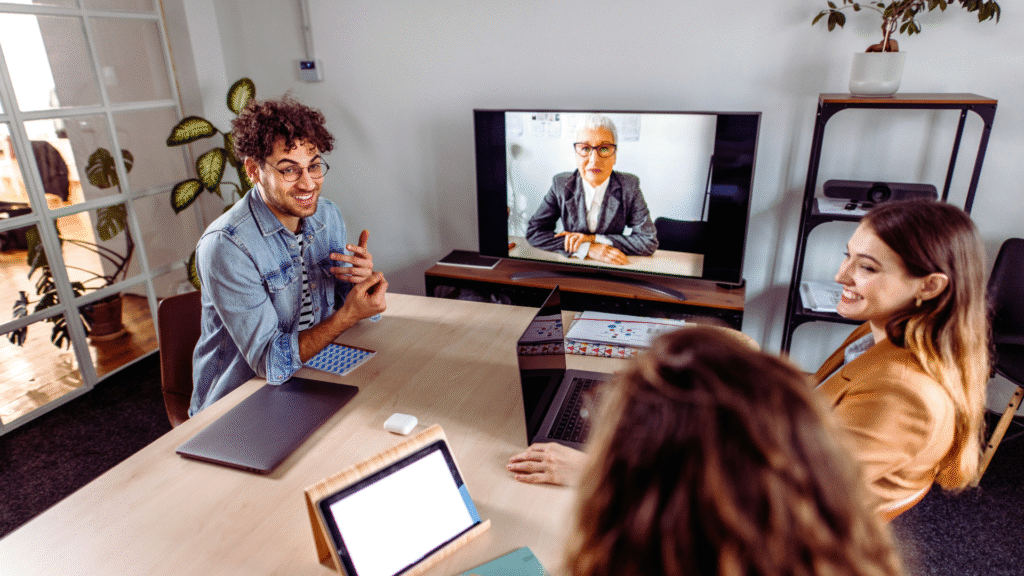
Hybrid Work: Hybrid arrangements facilitate dynamic interactions. Teams can engage face-to-face during in-person meetings, bolstering engagement and collaboration. Regular online check-ins can complement on-site interactions, ensuring everyone remains aligned.
Office Work: Office environments promote immediate communication. Employees can quickly consult with colleagues, fostering collaboration. While this can enhance team synergy, it may also lead to interruptions that disrupt deep work.
Work-Life Balance and Flexibility
Remote Work: Remote work often leads to improved work-life balance. With no commute, employees can allocate more time to personal interests. Nonetheless, the boundaries between work and personal life can blur, leading to potential burnout.
Hybrid Work: The hybrid model excels in offering flexibility. Employees can structure their workweek to accommodate personal commitments while also experiencing the benefits of onsite interaction. This balance can contribute to overall job satisfaction.
Office Work: In traditional office settings, work-life balance may suffer due to commuting and fixed schedules. While it provides a clear distinction between work and home life, it offers less flexibility. Employees may find it challenging to manage personal responsibilities within a rigid framework.
Impact on Employees and Organisations
The shift to remote, hybrid, and office work models significantly affects employee engagement, company culture, and opportunities for innovation. Understanding these impacts can help organisations optimise their performance and employee satisfaction.
Employee Engagement and Wellbeing
Employee engagement often varies across work models. In hybrid and remote environments, workers may appreciate the flexibility, which can lead to increased job satisfaction. They may feel more productive when working in comfortable settings. Conversely, prolonged isolation can hinder engagement, as employees miss out on spontaneous interactions.
Organisations must find a balance. Regular check-ins, virtual team-building activities, and tailored wellbeing programs can enhance engagement. It’s essential to foster a sense of belonging, regardless of work model. Establishing clear communication channels helps employees feel connected and valued.
In addition to engagement strategies, the physical work environment often plays a crucial role in employee wellbeing. For remote and hybrid employees, it’s important to ensure their home or flexible workspaces are ergonomically set up, well-lit, and properly ventilated.
Similarly, in office settings, businesses must ensure the workspace supports employee comfort and health by maintaining optimal temperature, air quality, and ventilation. To achieve this, partnering with a well-established commercial HVAC company for regular maintenance and repair ensures that the place remains comfortable year-round, fostering a productive and engaging environment for all employees.
Ultimately, a comfortable, safe, and well-maintained space can improve focus, reduce stress, and enhance overall productivity, regardless of where work takes place.
Impact on Company Culture and Work Culture
Company culture transforms when adapting to hybrid and remote work models. Traditional office environments encourage collaboration and camaraderie, while remote work may diminish these interactions. Organisations need to actively cultivate a strong culture that transcends physical locations.
Hybrid work can blend the benefits of both worlds, allowing for personal interactions and remote flexibility. Therefore, organisations should establish core values, emphasising trust and accountability. Encouraging feedback and open dialogue helps reinforce a positive work culture and strengthens employee bonds.
Mentoring, Training, and Innovation
Mentoring and training can be challenging in a remote or hybrid setting. Creating structured programmes that maximise online platforms can ensure continuous learning and skill development. Organisations must prioritise mentorship, as it fosters innovation and team cohesion.
Utilising various formats, such as webinars, online workshops, and one-on-one sessions, can enhance training effectiveness. Encouraging collaboration across teams can spark innovative ideas. Companies that embrace these opportunities find that hybrid models can lead to increased creativity and improved problem-solving abilities.
Future Trends and Real-World Examples
The landscape of work is continuously evolving, with hybrid work schedules becoming more prominent. The following explores various hybrid work models, specific case studies, and predictions for the future of flexible work.
Hybrid Work Schedules and Models
Hybrid work schedules combine remote and in-office work, tailored to meet organisational needs. Common models include a 3-2 arrangement, where employees work in the office three days and remotely for two. Other organisations opt for flexible arrangements, allowing employees to choose their locations based on project demands.
This flexibility can increase job satisfaction and productivity, as employees can tailor their work environments. Research indicates that 72% of employees prefer a hybrid model, highlighting a significant shift in workplace expectations.
Case Studies: Google, Salesforce, and Meta
Google has established a hybrid work model that mandates employees to be in the office three days a week. This approach aims to foster collaboration while allowing for remote work flexibility.
Salesforce, on the other hand, allows employees to choose between fully remote, hybrid, or in-office arrangements. This strategy focuses on employee choice, promoting work-life balance.
Meta has implemented a flexible model, encouraging teams to decide their work preferences. This decentralised approach allows them to adapt to various project needs while keeping the workforce engaged.
The Future of Flexible Work
The future of flexible work is likely to emphasise worker autonomy. Technology will play a crucial role, enabling seamless communication regardless of location.
Hybrid models will evolve, focusing on data-driven insights to optimise productivity and employee satisfaction.
Emphasis on mental health and work-life balance will shape policies, with companies likely offering more personalised work arrangements. Flexible work is set to become a standard expectation, reshaping how organisations operate.